A hardware wallet is generally better for isolating private keys from an everyday computer, while a software wallet is faster for routine Web3 activity. Neither is automatically safe: recovery-phrase handling, transaction verification, software authenticity and user behavior determine the real outcome.
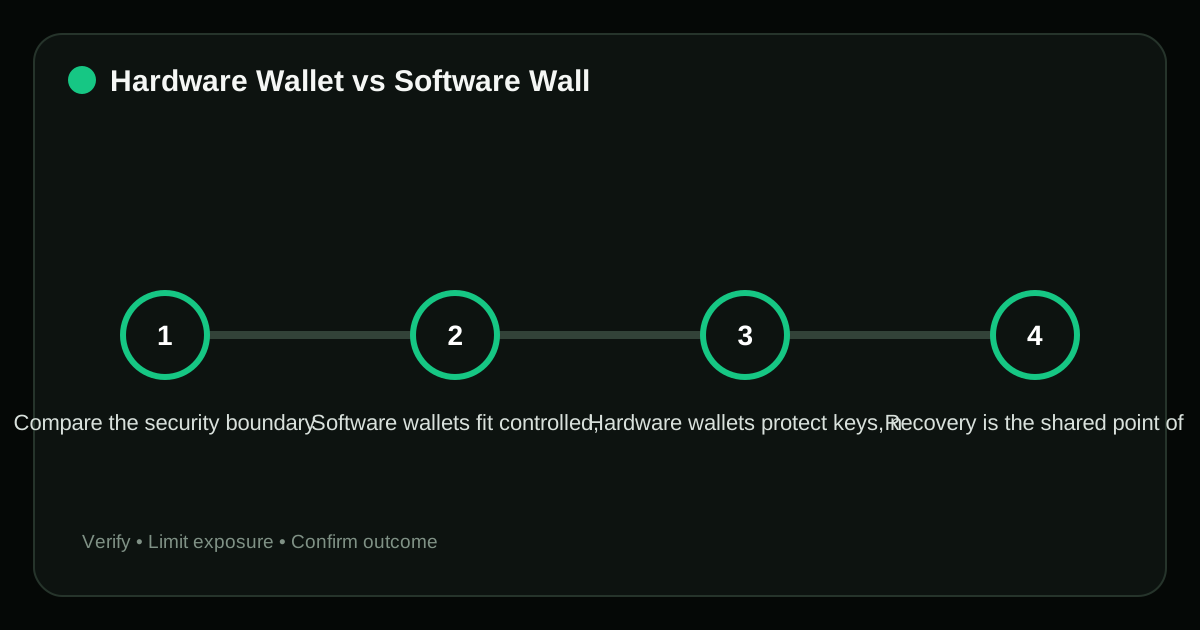
Compare the security boundary#
Software wallets keep encrypted key material on a phone or computer and sign using that device. Hardware wallets aim to keep private keys inside a dedicated signer, sending only the signature back to the connected computer.
| Decision factor | Software wallet | Hardware wallet |
|---|---|---|
| Everyday speed | High | Moderate |
| Key isolation | Depends on phone or computer | Dedicated signing device |
| Web3 convenience | Strong | Usually requires another interface |
| Malware exposure | Higher on general-purpose device | Reduced, not eliminated |
| Transaction verification | Mainly host screen | Device display can provide an independent check |
| Recovery burden | Seed or account-specific method | Seed/backup remains critical |
The useful difference is not “online versus offline.” A hardware wallet connects when signing. Its value is that the key should not leave the device and the trusted display can show what the device is authorizing.
Software wallets fit controlled, low-value activity#
A reputable software wallet can be appropriate for small operational balances, testing decentralized applications or receiving routine payments. It is easier to install, update and use across applications.
That convenience expands the attack surface. Browser extensions share an environment with websites and other extensions. Mobile wallets depend on the phone, operating system, app-store account and backup design. A fake update, malicious extension, clipboard hijacker or remote-access session can defeat otherwise correct behavior.
Use a dedicated browser profile, remove unused extensions and separate the interaction balance from long-term holdings.
Hardware wallets protect keys, not decisions#
A dedicated device cannot tell whether a legitimate-looking contract is economically safe. It will sign a malicious approval if the user confirms it. It also cannot help if the recovery phrase is entered into a phishing page.
The strongest habit is to verify destination and transaction data on the device display. Trezor describes the trusted display as a way to see the data the hardware is actually processing rather than relying on a potentially compromised computer screen.
Buy through the manufacturer or an authorized channel, initialize the device yourself and reject any package containing a pre-generated seed. Install firmware only through official software.
Recovery is the shared point of failure#
Both wallet types often rely on recovery material. If every device fails but the backup is correct, a compatible recovery may restore access. If the backup is stolen, the hardware device’s PIN may no longer matter. If the backup is lost and the device fails, no support desk may be able to reconstruct it.
Choose physical storage and recovery procedures before moving a large balance. Verify the backup using the product’s documented method, not a web-based “seed checker.”
A two-wallet design is often more realistic#
The choice does not need to be exclusive. A practical setup uses a hardware-backed wallet for long-term or high-value authority and a separate software wallet for routine interactions. Transfer only the amount needed for the task.
This separation limits the effect of a malicious dapp without making every small action operationally painful. It also creates a clearer signal: a long-term wallet should rarely need experimental approvals.
Frequently asked questions#
Can a hardware wallet be hacked through the computer?
It is designed to keep keys isolated, but a compromised computer can still deceive the user about an address or transaction. Verify details on the device itself.
Is a mobile wallet safer than a browser extension?
It has a different attack surface, not an automatic guarantee. Device updates, app authenticity, backups, permissions and signing behavior remain important.
Do I need a hardware wallet for a small balance?
Evaluate the value, activity, recovery ability and consequences of loss. Strong software-wallet hygiene may be proportionate for limited operational funds.
Can I use the same seed in both wallet types?
Technically possible in some products, but entering a hardware-generated seed into an online software wallet removes the isolation benefit. Treat that seed as hot afterward.
Sources#
- Bitcoin.org: Securing Your Wallet
- Trezor: What Is a Trusted Display?
- SEC Investor Bulletin: Crypto Asset Custody Basics
Risk notice: Wallet design reduces specific risks but cannot eliminate loss from compromised recovery material, unsafe signatures or incorrect transfers.
Editorial standard
This guide is educational and source-led. Security controls, exchange rules and legal requirements can change; verify critical steps through the relevant official service before acting.